Showing posts with label N.A.S. Miramar. Show all posts

Friday, December 8, 2017

Something just like this...


When you reminisce on years now past and the radio happens to be on... ( LISTEN HERE )

I've been reading books of old, the legends and the myths...
Achilles and his gold, Hercules and his gifts,
Spiderman's control and Batman with his fists,
And clearly I don't see myself upon that list.
But she said, where do you want to go? How much you want to risk?
I'm not looking for somebody with some superhuman gifts...
Some superhero, some fairytale bliss...
Just something I can turn to, somebody I can kiss...
I want something just like this...

Yours trully,
Asra Kron

Friday, June 16, 2017

NAS Miramar Order of Battle

This is Naval Air Station Miramar order of battle.
Our present is as precious as our past and we treasure it as we decisively move forward into the future. Our squadrons are manned by capable and proud Naval Aviators and Student Naval Aviators and those who are now on hold will rise again. Naval squadrons are made of pilots, dedication, service, purpose and history, and Miramar has a proud past, a solid present and a hopeful future on all counts. Make no mistake about that.

Here is to many more missions and blue skies!


VFC-13 "Saint Adversary"

The aggressor squadron of the NFWS. Current pilots are nos. 20 and 21, respectively CAPT. Kron and CAPT. Kuhn; former pilots are CDR. Hewitt and LT. Vayandar. Its role: to provide adversaries and hard targets for TOPGUN attending crews.


VF-84 "Jolly Rogers"

The front line carrier based fighter squadron of NAS Miramar, first assigned to the USS Nimitz, CVN-68, it is now awaiting deployment with a different CVW. Current pilots are nos. 201, 202 and 203, respectively CAPT. Kron, LCDR. Zane and LCDR. Kaz; current RIOs: LCDR. Rainbow. No pilots ever left this squadron; former RIOs: ENS. Smith. Its role: to provide close/medium range eyes on, intercept and protection for NAS Miramar and the USS Enterprise. To provide interception, LRP and deep strike to the USS Enterprise. To provide high altitude patrols in NAS Miramar's area of influence (Tuarua Fiji).


VF-101 "Grim Reapers"

Visiting squadron ashore from the USS Nimitz during 2016 and the first quarter of 2017. No current pilots due to unfortunate recent events. Former pilots from the USS Nimitz CSG 11 were: CAPT. Kron, CAPT. Kuhn, LCDR. Zane, LTJG. Jericho and ENS. Fenring (CMDMC Fenring enlisted in the Navy as O-1 - see "Margot"), returning to the service with her SICG rank of MCPO. Its role: No current role. The squadron remains with the USS Nimitz with active duty pilots, and most of the pilots mentioned have unfortunately been dismissed from CSG 11, where they maintained until their dismissal replacement/reserved status with the Grim Reapers, with the exception of LTJG. Jericho who transferred from NAS Miramar to redeploy from Third Fleet command in the first quarter of 2016. So ends a chapter in the Grim Reapers history. May they fly strong and true for years to come.


VF-154 "Black Knights"

The most hard hit squadron at NAS Miramar, the Black Knights are the fixed wing squadron with the greatest number of pilots and the greatest ordeals. After losing the Hornets and reverting to Skyhawks, the squadron that was always meant to deploy with the USS Carl Vinson (which prompted RADM. Harcassle, at the time Third Fleet's CO, to make Third Fleet's East Sea aircraft carrier the CVN-70) it only briefly saw deployment aboard the Flying V. As the Carl Vinson sailed with 2nd. Fleet, recently, the squadron is being reassigned to a new carrier as rotation unit. Current pilots pilots are nos. 300 and 301, respectively CAPT. Kuhn and CAPT. Kron. Former pilots were: CDR. Hewitt, LTJG. Spaartza, ENS. Sax Kron, ENS. McCloud (*) and ENS. Tracer. Its role: to provide close/medium range eyes on, intercept and protection for NAS Miramar and the mother carrier. To provide LRP and deep strike to the mother carrier. To provide high altitude patrols in NAS Miramar's area of influence (Tuarua Fiji). The squadron was mothballed after the last 301 pilot left and briefly returned to active duty with the CVN-70 short lived deployment. It is now to be mothballed again, waiting for new pilots.
(*) ENS. McCloud was on RL extended leave is now returning to the Fleet - update required.


VAQ-129 "Vikings"

Carrier Attack Squadron ashore awaiting deployment with the USS Midway, CV-41. The Vikings were established following the deployment at Miramar of an alleged EA-6B crew member. It was then (first quarter of 2017) in implementation stages and had three pilots, a prospect ACW and a prospect pilot. Current pilots are nos. 800/900 and 802, with a NB in nos. 800 and no. 900 and a prospect NB/ATW in no. 802 and no. 900, respectively CAPT. Kron, LCDR. Kaz, LT Crooft (*) and SN. Breathe. Former pilots and prospect pilots were: ENS. O'Mara and Ms. Fairport, a civilian contractor test pilot that is now in the service with 2nd. Fleet, not having returned to NAS Miramar after OCS. Its role: To provide support to 3rd. Fleet air and surface operations in the AWACS and AEW roles (EA-6B). To provide 3rd. Fleet medium range support in the attack, "Iron Hand" and AAR roles (A-6E, A-6A and KA-6A/E).
(*) LT. Crooft was on authorized extended leave and remains very much a part of Third Fleet.


VRC-01 "Lifters"

The Lifters fly CV-22 Ospreys out of NAS Miramar. Due to the absence of qualified pilots, the squadron remains as COD option with a single aircraft; hopefully more SNAs will develop an interest for this ugly duck. There is only one current pilot, no. 28, CAPT. Kron. Former pilots were: CDR. Hewitt, LTJG. Spaartza and LTJG. Ryder. Its role: To support the fleet in the carrier on board delivery role. To provide medium/low altitude patrols in NAS Miramar's area of influence (Tuarua Fiji).


VP-4 "Skinny Dragons"

The long range, medium/high altitude maritime patrol squadron of NAS Miramar. Current pilots are nos. 901/22, 902 and 903 (*), respectively CAPT. Kron, LCDR. Rainbow and LT. Crooft (*). No former pilots. Its role: To provide the fleet with long range patrol capability. To provide the fleet with light transport of persons and cargo. To provide medium/high altitude patrols in NAS Miramar's area of influence (Tuarua Fiji).
(*) LT. Crooft was on authorized extended leave and remains very much a part of Third Fleet.


VR-54 "Revellers"

The transport/logistics/tanker high capacity squadron of NAS Miramar. Current pilot is at the moment no. 03, CAPT. Kron. Former prospect pilot: Mr. McMillan, a civilian contractor test pilot that is now in the service with 2nd. Fleet, not having returned to NAS Miramar after OCS. Its role: To provide the fleet with high capacity transport of personnel,cargo and AAR. To serve the fleet in long range maritime patrols when necessary. This squadron has been on hold for lack of invested pilots. No. 03 will soon be replaced by a sister aircraft of smaller dimensions to fulfill this role as needed.


VT-10 "Eagles"

Fixed wing training squadron, the Eagles fly for IFT (Intermediate Flight Training) as part of NATC. They are one of NAS Miramar's oldest squadrons and has had quite a few pilots/instructors. Current pilots/instructors are nos. 600, 601, 602 (*) and 603, respectively CAPT. Kron, CAPT. Kuhn, LCDR. Zane (*) and LCDR. Kaz. Former pilots were: LTJG. Spaartza. Its role: Intermediate Fixed Wing Flight Training.
(*) The 602 assigned to LCDR. Zane was LTJG. Spaartza's aircraft.


VX-1 "Pioneers" 

The fixed wing test squadron of the USNTPS (United States Naval Test Pilot School), based at NAS Miramar. Current pilots flying various X-planes are CAPT. Kron and LCDR. Kaz. Former prospect pilots were Ms. Fairport and Mr. McMillan, civilian contractor test pilots that are now in the service with 2nd. Fleet, not having returned to NAS Miramar after OCS. Its role: To provide the fleet with new fixed wing aircraft assessment and testing of assets for future adoption. To provide instruction to future naval test pilots.


HS-4 "Black Knights"

Helicopter multi-role squadron based at NAS Miramar, awaiting rotations aboard a carrier. Current pilots are nos. 00/20, 21, 60, 61, 66 (*), respectively CAPT. Kron, CAPT. Kuhn, Squadron Aircraft, LCDR. Rainbow and CAPT. Kron (*). No former pilots. Its role: To provide ASW, SAR, CSAR to the fleet and serve in various utility roles.
(*) No. 66 is Sea King BuNo 152711 (historic), the "old Six Six", and is assigned to the station commander.


HSC-9 "Tridents"

Helo multi-purpose maritime squadron in formation after the retirement of HSC-22 "Sea Kinghts" as USS Nimitz ashore squadron. The Tridents will be ashore at NAS Miramar, but will deploy as a rotation squadron with a new CVW. [update required as it becomes active]


HSC-13 "Rays"

The front line helo squadron of NAS Miramar. Current pilots are nos. 50/51/69, 57, 70, 73, 74, respectively CAPT. Kron, Squadron Aircraft, MCPO Fenring, LCDR. Zane and LCDR. Rainbow. Former pilots were: ex-LCDR. Kashmal (now an Army Colonel - unconfirmed), LTJG. Spaartza, ENS. McCloud (*), ENS. Smith and ENS. Coventry. Its role: To support the fleet in the maritime multi-mission role, including ASW, SAR, CSAR and patrol. To provide low altitude patrols in NAS Miramar's area of influence (Tuarua Fiji). To serve aboard Dauntless class frigates of the fleet.
(*) ENS. McCloud was on RL extended leave is now returning to the Fleet - update required.


HSC-22 "Sea Knights"

Visiting aircraft from the USS Nimitz in early to mid 2017. Due to unfortunate recent events, aircraft from this unit are no longer ashore at NAS Miramar. HSC-22 will be replaced by HSC-9 "Tridents", ashore at NAS Miramar. The Sea Knights remain a CSG 11, USS Nimitz, CVN-68, squadron.


HT-28 "Hellions"

Rotor training squadron, the Hellions fly for IFT (Intermediate Flight Training) as part of NATC.
Current pilots/instructors are nos. 551, 552 and 555, respectively CAPT. Kron, LCDR. Rainbow and a Squadron Aircraft. No former pilots. Its role: Intermediate Rotary Wing Flight Training.


HX-21 "Blackjack"

Rotary wing test squadron of the USNTPS (United States Naval Test Pilot School), based at NAS Miramar. Current pilots flying various X-helos are CAPT. Kron, LCDR. Rainbow and LCDR. Kaz. Former prospect pilots were: Ms. Fairport, a civilian contractor test pilot that is now in the service with 2nd. Fleet, not having returned to NAS Miramar after OCS. Its role: To provide the fleet with new rotary wing aircraft assessment and testing of assets for future adoption. To provide instruction to future naval test pilots.


For units in other Third Fleet locations refer to the local CO for information and details.
- NAF Eagles Nest: CAPT. Vickster "Speed" Kuhn (NAFENCO)
- NAF Xeeko: CDR. Christina "Steady" Dehner (NAFXECO)
- NAF Bagheera (outpost): CDR. Christina "Steady" Dehner (NAFBAGCO)

For the complete list of Third Fleet squadrons see: "Squadrons of Third Fleet".
For the complete NAS Miramar squadron line up see: "NASM Inventory - Aircraft - by Unit"

CAPT. Asra Kron,
NASMCO


Wednesday, May 31, 2017

IFT VH01 NAAR02


This class is taking place today at 1500 hours SLT.
This is the second module of the VH01 class, you will need this class to have VH01 completed.
To attend this class you need prior NAAR01 attendance.

Naval Aviation Aircraft Recognition (NAAR) Class - 02
Instructor: CAPT. Asra Kron, NASMCO
Estimated duration: 1.0 hours
Location: N.A.S. Miramar Main - Du Sud Isle - Map Room *
Attendees: IFT enrolled student naval aviators
Prerequisites: IFT enrollment and Naval Aviation Aircraft Recognition (NAAR) Class - 01
Follow up: IFT VH01ACO - AFT NAAR03

1. Types of identification.
2. Bureau numbers.
3. Branch markings.
4. Deployment location and tail codes.
5. Squadron identification and insignia.
6. Squadron of deployment numbers.
7. Role markings.
8. Third Fleet squadrons.

* Map Room direct access with NASM tags only. IM a local officer for transport if needed.

CAPT. Asra "Cougar" Kron
NASMCO

Tuesday, May 23, 2017

ATC Basic Class at NAS Miramar


This class is taking place today at 16:00 hours.

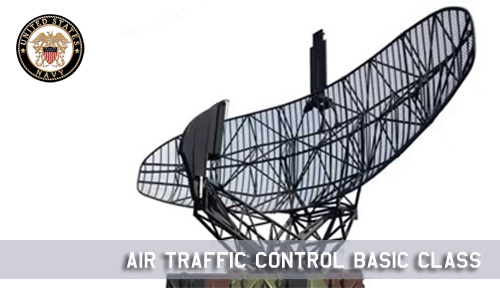
Air Traffic Control Basic Class
Instructor: CDR. Asra Sax Kron, NASMCO
Estimated duration: 1.5 hours
Location: N.A.S. Miramar Main - Du Sud Isle - Building B, Briefing room

Attendees: USNSL pilots, aircrews and ATC personnel, NSTC students aiming for those roles.
Prerequisites: None.
Follow up: ATC intermediate and advanced classes and evaluation in action.

1. ATC communication types in SL.
2. ATC radar types in SL.
3. Aircraft identification.
4. On the ground.
5. In the air.

See complete ATC course class structure here.

CDR. Asra "Cougar" Kron
NASMCO

Monday, May 22, 2017

Naval Aviation in Third Fleet 101


Although we have now been operating as Third Fleet for well over a year, there seems to be a lot of misinformation about who can fly what, and the confusion generated by that misinformation has reached intolerable levels. So lets keep this notice for future reference, shall we? It is what we do in Third Fleet for over a year now, not some made up, half ass, two bit theory. This is what we do.

UNITED STATES NAVAL AVIATION PATHS IN THIRD FLEET

1. OCS / RTC
OCS grants access to Primary Flight Training (PFT), until now known as Basic Flight Certification (BFC). Officers will then have the opportunity to engage in higher levels of training regarding flight, enlisted are limited to aircrews.
Both OCS and RTC graduates can take the SLMC NACCS (Naval Aircrew Candidate School) course so they can serve as crew aboard a variety of aircraft, for which further practice will be provided with the squadrons they apply for. In some instances aircrews will further their practice by taking specialty courses.

Student Naval Aviator Candidates (SNAs) are deployed to their stations/facilities/bases and start to fly immediately with the primary squadron they are assigned to. They can and should integrate the structure immediately - this is Second Life and we are here to have fun flying above all.
Not only Cargo pilots and Rotary Wing pilots but also JET PILOTS can fly with operational squadrons all through their path to the Gold Wings, under supervision from the older officers in full active duty - we call this stage conditioned duty, as some may not have the knowledge to perform fully and need practice and training. The more practice each squadron can provide locally the better. Keep in mind Third Fleet methods as they are taught in BFC and IFT should be the norm when instructing SNAs with their squadrons during practice. At this very same time SNAs should be taking BFC or IFT, thus allowed to practice while in their assigned squadrons.

2. Primary Flight Training: Pre-Flight Indoctrination School and Primary Flight School
Until now known as Basic Flight Certification (BFC), Primary Flight Training (PFT) is the first stage for the Student Naval Aviator (SNA) and it has two steps: Pre-Flight Indoctrination (PFI) and Primary Flight Training (PFT).
It is taken right after OCS and it has been provided by lead 7th Fleet instructors with support from 3rd Fleet NATC's instructors from Miramar. Theory is given at NAS Miramar or the USS Kitty Hawk and practice at NAF Eagles Nest, NAS Miramar or the USS Kitty Hawk. The instructors have the option of CVA-63 for initial contact with carrier operations.
Details on PFI and PFT will be added here soon.

After the BFC exam is passed, the officers are still Student Naval Aviators (SNAs), but they can decide to stay that way if all they wish is to do is fly unarmed, limited duty operations - such as Cargo or Patrol or SAR.
Note that Search and Rescue in the Third Fleet has ALWAYS been common to all rotary wing squadrons since the vast majority of helicopters we use are SAR enabled. Pilots from any squadron can be SAR certified at Third Fleet recognized SAR schools (including those part of Coast Guard groups) and serve in their squadrons as SAR pilots. Although there may be dedicated SAR squadrons in the Navy we tend to leave that to the Coast Guard and see that each station/facility/base has local SAR and/or CSAR capability. There is no centralized SAR command in the Third Fleet as that is exclusive to SLCG (Second Life Coast Guard) - just as in real life. The main role of Search and Rescue in Third Fleet is operations related - Combat Search and Rescue (CSAR), for lack of better definition. In a nutshell, we do not rescue civilians unless in case of an emergency.
Front line V and H squadrons that fly complex operations - including AAR (Air to Air Refueling) and CSAR (Combat Search and Rescue) - require IFT certification and grant AFT credits to be flown outside the conditioned duty status - they are initially flown as practice for IFT and as AFT trials, under the supervision of naval aviators in the SNAs respective squadrons - if no experienced naval aviators fly in those squadrons the SNAs need a temporary deployment with a squadron performing a similar role where experienced naval aviators already fly full active duty.

3. IFT - Intermediate Flight Training
From BFC, those interested in pursuing higher levels on the path to the Wings of Gold need to attend IFT (Intermediate Flight Training). IFT is described in full detail on the following page and notices:

- IFT program layout -
- IFT WOC/T2 exam (VEX) -
- IFT WOC/900 exam (HEX) -
- IFT Cycles -

IFT has a theory component given exclusively at NAS Miramar with the exception of the COQ (Carrier Operations Qualification) classes that may be given either at Miramar or aboard the USS Kitty Hawk, and a practice component that takes place at NAS Miramar and CVA-63. The theory component is common to fixed and rotary wings but the first time IFT is taken a primary role must be chosen - fixed or rotary wing. That will determine which practice component and exam (VEX or HEX) to take first - there is only ONE practical exam per IFT cycle that EACH candidate can take. Starting with rotary and taking the HEX means IFT may be taken again to get naval aviator grade certification for fixed wings, going through the practice component related to fixed wings and taking the VEX, and vice versa.

SNAs taking either fixed wing or rotary wing primary enroll in the same IFT cycle. Once the common core theory classes are done, the candidates break into two groups for V or H classes.

Since the theory component is common core it is not required to take another theory oral exam (VHO) after the secondary IFT practice component. However we do encourage refreshing knowledge by attending the theory classes again, and if applying for a secondary role IFT after 20 weeks have passed since the primary VHO exam attending the theory classes a second time is mandatory.

After the IFT exams are passed (VHO + VEX or VHO + HEX) the Student Naval Aviators (SNAs) are ready to apply for their Gold Wings by adding to these exams any AFT credits they may have. If they did not fly with front line squadrons in advanced roles or were not deployed to an elite unit with advanced operations (see AFT) while taking the IFT, then they must gather those credits after the IFT exams. Keep in mind that from our experience at Miramar, close to 100% of SNAs going through IFT are gathering the required AFT credits at the same time. This means that once the IFT exam is passed they are ready to add the AFT credits and get their Wings of Gold, becoming Naval Aviators.

4. AFT - Advanced Flight Training
AFT (Advanced Flight Training) is not a course but rather a set of credits given to those who engage in complex operations, such as special operations, expert operations and advanced flight operations. These missions are flown with conditioned duty status with the SNAs squadrons and are supervised by local naval aviators. Examples of special operations are SEAL teams support and Air to Air Refueling; examples of expert operations are CSAR or PATROU like operations (Patrol Routes with high standard requirements); examples of advanced flight operations are aerobatic flight or test flight.

Other than with front line squadrons, the SNAs can be deployed temporarily or permanently to an elite squadron/unit/school where advanced flight is part of day to day operations - if temporary or permanent deployment is required depends on the nature of those squadrons/units/schools. In USNSL Third Fleet those are: Navy Fighter Weapons School TOPGUN - NFWS (NASM), Navy Flight Demonstration Team "Blue Angels" - NFDT (NAFEN) and United States Naval Test Pilot School - USNTPS (NASM). With any of these, AFT credits are obtained by participating actively in day to day operations.

SNAs can work towards these credits alongside IFT - and 99% have done it that way so far - so that by the time they pass the IFT exams their commanding officers can provide information about their performance in these roles and thus have their AFT credits verified. It is the responsibility of each SNA to provide their local CO with reports that prove they are engaged in AFT activities, from which the CO's can then provide their reference to NATC and have those credits factored in.

 5. NATC vs Flight Schools
One last and very important thing. Most SNAs already have flying experience in Second Life, that is just a fact. To various degrees, from novice to expert, pilots arrive in USNSL to engage in a military naval career that in some cases means pursuing the Wings of Gold path - but not always.
Third Fleet NATC programs are not designed to simply teach how to fly, they are designed to teach how to fly and perform flight related operations in a US Navy environment.
No matter what the naval aviator candidate level is, regarding flight skills, the navy is a completely different setting than civilian flight or even that taught by other branches (i.e. Air Force). That is why there is a path to Naval Aviator. And that is why the Wings of Gold mean something special.

More information will be added as needed.
For details and questions contact NAS Miramar command.

CAPT. Asra Kron
NASMCO

Note: Due to the importance of this subject and to facilitate consult in the future, this page will be available as a special section here - for the original entry on the weblog see here.
Note 2: To prevent confusion with LDO's the term limited duty was replaced by conditioned duty.
Note 3: To harmonize terminology with 7th Fleet, Naval Aviator Candidate (NAC) was replaced by Student Naval Aviator (SNA).
Note 4: PFIS, PFS, IFTR and AFTR were replaced by PFI, PFT, IFT and AFT.
...

Thursday, May 18, 2017

IFT Cycles


NASMCO Office
2017-05-18

Intermediate Flight Training cycles and details

To: All stations Third Fleet
Cc: All stations USNSL

Brief history of IFT in Third Fleet

IFT has always been a part of NAS Miramar and it has evolved from certifying pilots who already had Navy service to training new Naval Aviator candidates.
In the beginning the classes and practice were given one on one due to the amount of candidates available each month. To this date all NAS Miramar officers with Gold Wings that did not achieve them before January 2016 and a few others went through the program.
Every candidate was examined, with a success rate of 9/10. This includes experienced officers who were tested at NAS Miramar before being awarded a new set of Gold Wings by their own initiative.
As the number of candidates increased the IFT WOC/T2 was created, now known also as VEX, and the candidates were assembled for the theory classes and handled one on one for practice, a few at a time each month.
We have now reached a point where it is justifiable to create IFT cycles - when the IFT program is held periodically much like the OCS at NSTC. Up to now, for a rookie pilot, IFT previously took several months to pass. We are formalizing this and compressing the cycle.

The IFT program

Developed in cooperation with 7th Fleet during last year, the program has been augmented to accommodate a number of classes that have been deemed important and part of the program's scope. There is now a solid theory component and a solid practice component that explores all that is taught in the theory classes.
The complete program lasts 8 weeks and the cycles have 2 week intervals between them. Theory and practice credits may be cumulative as long as they do not spread for more than 20 weeks from the initial enrolment and/or exams taken in the meantime.

For the complete program layout see HERE.

There are two paths in IFT - Fixed wings and rotary wings. You may choose which is your primary but need both if you wish recognized NA grade in both categories. However you can opt for just one qualification. The theory class component is common to both fixed and rotary wing IFT's. The rotary wing IFT practice has been recently updated and formalized just as the fixed wing has been for many months now.

For the WOC/T2 Assessment (VEX) see HERE.

For the WOC/900 Assessment (HEX) see HERE.

We are now finishing the update and will start with the first cycle on Monday, May 29, 2017 (30 maybe as the 29 is Memorial Day). Classes and practice must be completed by June 26, 2017, followed by the oral exam (VHO) and the practical exam (VEX or HEX), during the week of June 27 to July 02. Following another week of interval, the next cycle starts July 10, 2017.


IFT classes and practice take place at NAS Miramar with one exception - The Carrier Qualification component. COQ classes may take place aboard the USS Kitty Hawk with 7th Fleet instructors but also at NAS Miramar with 3rd Fleet instructors. COQ practice takes place either on the USS Carl Vinson or the USS Kitty Hawk with initial stages at NAS Miramar.

IFT instructors:
CAPT. Asra Kron
CAPT. Vickster Kuhn
CAPT. Sidney Pobieski
CDR. Helena Stenvaag
LCDR. An Rainbow
LCDR Skarah Zane
LCDR. Jenny kaz
LT. Lalo Wolf
* more instructors tba

The IFT program has a PQS established, covering all classes and practices.

As a final note I remind everyone that in parallel with the IFT program (or after it's completion) the NA candidate must obtain Advanced Flight Training (AFT) credits to earn the Gold Wings, which are granted when both IFT and AFT requirements are met.
AFT Credits are achieved by participating in documented complex missions with any Third Fleet / Seventh Fleet front line squadrons or via deployment to one of the advanced units/schools in Third Fleet: NFDT, NFWS or USNTPS, with documented participation in regular missions.
For details see here.

I hope this clarifies any doubts about the IFT program and hope to see Class 01 of 2017 very soon.

CAPT. Asra "Cougar" Kron
NASMCO


Friday, May 12, 2017

OSCO/001/17 WOC/900 Assessment

[ updated May 2017 ]

To all instructors and Naval Aviator Candidates,

WOC/900 Assessment 2017 [ HEX ]
Practical examination of Intermediate Flight Training [ IFTR ] - see here

This assessment has two parts; on the first part, the candidate is allowed a "weapon of choice" * (WOC), meaning he or she will perform the required drills in his or her own aircraft. On the second part, the exact same set of drills will be executed on a HT-28 TH-900 NOTAR.
Throughout all the tests the candidate's skills on procedure - from ground protocols to ATC and radio communications - will be evaluated.

The exam takes place between NASM and NSTC (1 to 3) and on FFH-69 (4).

WOC required drill set:
1. Set of 5 different types of landings at NASM using all patterns - 4 successful.
2. Set of 5 landings on a Dauntless class frigate pad - 3 successful.
3. GOTO NSTC. Navigate to NSTC. Landing at NSTC ends this drill. One attempt - One landing.
4. CVN-70 Take off & landing. 2 successful sets on the USS Defiant deck on 3 attempts.

 VT-10 T-2C required drill set:
1. Set of 5 different types of landings at NASM using all patterns - 4 successful.
2. Set of 5 landings on a Dauntless class frigate pad - 3 successful.
3. GOTO NASM. Navigate to NASM. Landing at NASM ends this drill. One attempt - One landing.
4. CVN-70 Take off & landing. 2 successful sets on the USS Defiant deck on 3 attempts.

Upon completion of the WOC/900 assessment the candidate will be H rated and assigned to VT-10 for fixed wing training in case the candidate wants fixed wing NA grade certification. The practical fixed wing portion of IFTR can be taken at any time after the HEX (rotary wing exam) but if more than 2 IFTR cycles go by after the VHO (oral exam common to fixed and rotary wings) the candidate needs a refresher of all theory classes - but no exam required, this because missing two cycles means a 20 week lapse between the VHO exam and the VEX exam.


Do the deed. Hooyah.

CDR. Asra Kron
NASMCO

* Thought you might enjoy Mr. Christopher Walken's little flight.

OSCO/002/17 WOC/T2 Assessment

[ updated May 2017 ]

To all instructors and Naval Aviator Candidates,

WOC/T2 Assessment 2017 [ VEX ]
Practical examination of Intermediate Flight Training [ IFTR ] - see here

This assessment has two parts; on the first part, the candidate is allowed a "weapon of choice" * (WOC), meaning he or she will perform the required drills in his or her own aircraft. If the WOC is a single seat, the evaluating officer will fly on the candidate's wing or remain on the ground while execution lasts; on the second part, the exact same set of drills will be executed on a VT-10 T-2C.
Throughout all the tests the candidate's skills on procedure - from ground protocols to ATC and radio communications - will be evaluated.

The exam takes place between NASM and NSTC (1 to 3) and on CVA-63 (4).

WOC required drill set:
1. Bounce set of 3 on NASM runway 18 L. Score and time evaluated.
2. NASM landing set of 3 over 85 score on runway 18 L. 85 score 3 landings out of possible 4.
3. GOTO NAFGO. Navigate to NAF Gorlanova. Landing at NAFGO ends this drill. One attempt.
4. CVN-70 Trap/Short landing. 2 successful landings on the USS Kitty Hawk deck on 3 attempts.

 VT-10 T-2C required drill set:
1. CVN-70 Trap/Short landing. 1 successful landing on the USS Kitty Hawk deck on 1 attempt.
2. GOTO NASM. Navigate to NAS Miramar. Landing at NASM ends this drill. One attempt.
3. Bounce set of 3 on NASM runway 18 L. Score and time evaluated. Average above 85.
4. NASM landing set of 3 over 85 score on runway 18 L. 85 score 3 landings out of possible 5.

Upon completion of the WOC/T2 assessment the candidate will be V rated and assigned to HT-28 for rotor training in case the candidate wants Rotor NA grade certification. The practical rotary wing portion of IFTR can be taken at any time after the VEX (fixed wing exam) but if more than 2 IFTR cycles go by after the VHO (oral exam common to fixed and rotary wings) the candidate needs a refresher of all theory classes - but no exam required, this because missing two cycles means a 20 week lapse between the VHO exam and the HEX exam.


Do the deed. Hooyah.

CDR. Asra Kron
NASMCO

* Thought you might enjoy Mr. Christopher Walken's little flight.

Thursday, May 11, 2017

ATC Class at NASM


This class is taking place today at 14:30 hours.

Air Traffic Control Basic Class
Instructor: CDR. Asra Sax Kron, NASMCO
Estimated duration: 1.5 hours
Location: N.A.S. Miramar Main - Du Sud Isle - Building B, Briefing room

Attendees: USNSL pilots, aircrews and ATC personnel, NSTC students aiming for those roles.
Prerequisites: None.
Follow up: ATC intermediate and advanced classes and evaluation in action.

1. ATC communication types in SL.
2. ATC radar types in SL.
3. Aircraft identification.
4. On the ground.
5. In the air.

See complete ATC course class structure here.

CDR. Asra "Cougar" Kron
NASMCO

Thursday, March 23, 2017

ATC Class at NAS Miramar


This class is taking place today at 16:15 hours SLT.

Air Traffic Control Basic Class
Instructor: CDR. Asra Sax Kron, NASMCO
Estimated duration: 1.5 hours
Location: N.A.S. Miramar Main - Du Sud Isle - Building B, Briefing room

Attendees: USNSL NA's, NFO's and AW personnel, NSTC students aiming for those roles.
Prerequisites: None.
Follow up: ATC intermediate and advanced classes and evaluation in action.

1. ATC communication types in SL.
2. ATC radar types in SL.
3. Aircraft identification.
4. On the ground.
5. In the air.

CDR. Asra "Cougar" Kron
NASMCO

Saturday, March 4, 2017

New SCPMU's received

SCPMU's 17A, B and C in hangar C at Miramar, just arrived. 03/04/2017.


The Navy Flight Demonstration Team received three new Show Center Point Marker Units (SCPMU's) and will start using them as of March 04. These units will provide the team with show center point location, secure communications and a close proximity radar. Deployed during practices and shows at center point, they are also the position from where Angels 7 and 8 do their jobs.

As usual, click on the images to enlarge.

Unit 17C will be stationed at NAFEN.
Units A and B remain stationed at NASM.
17A will be the Show-Ready unit, following the team.
LT. Chardy Oak, Angel 2, inspects unit 17C before shipment.

The USNSL NFDT Blue Angels wish to thank MFFK, the manufacturer of the units, for the support and steadfastness demonstrated during the commission stage, supplying the necessary specs for the application of the NFDT color scheme at Miramar. Our warmest regards to Ms. Cindy Mofafeikou for her outstanding work as MFFK liason.

CDR. Asra Kron
NASMCO, Angel 7


Wednesday, March 1, 2017

NAAR 02 Class at NAS Miramar


This class is taking place today at 1930 hours SLT.
This starts the NAAR 02 cycle, you will need this class to attend.
Catch up NAAR 01 classes available by schedule for this series first run - minimum of three attendees required for catch up classes.

Naval Aviation Aircraft Recognition (NAAR) Class - 02
Instructor: CDR. Asra Sax Kron, NASMCO
Estimated duration: 1.0 hours
Location: N.A.S. Miramar Main - Du Sud Isle - Map Room *
Attendees: USNSL pilots, aircrews and ATC personnel, NSTC students.
Prerequisites: Naval Aviation Aircraft Recognition (NAAR) Class - 01.
Follow up: NAAR 03 classe and evaluation in action.

1. Types of identification.
2. Bureau numbers.
3. Branch markings.
4. Deployment location and tail codes.
5. Squadron identification and insignia.
6. Squadron of deployment numbers.
7. Role markings.
8. Third Fleet squadrons.

* Map Room direct access with NASM tags only. IM a local officer for transport.

CDR. Asra "Cougar" Kron
NASMCO

Tuesday, February 28, 2017

XF/A-2C 2 MFFK

"X" planes at Miramar. USNTPS asset procurement # X0117.

NAAR 01 Class at NAS Miramar


This class is taking place today at 1930 hours SLT.
Tomorrow starts the NAAR 02 cycle, you will need this class to attend.
Catch up NAAR 01 classes available by schedule for this series first run - minimum of three attendees required for catch up classes.

Naval Aviation Aircraft Recognition (NAAR) Class - 01
Instructor: CDR. Asra Sax Kron, NASMCO
Estimated duration: 1.0 hours
Location: N.A.S. Miramar Main - Du Sud Isle - Map Room *
Attendees: USNSL pilots, aircrews and ATC personnel, NSTC students.
Prerequisites: None.
Follow up: NAAR 02 and NAAR 03 classes and evaluation in action.

1. Mission design series.
2. Aircraft type.
3. Modified mission.
4. Status.
5. Design and block.
6. Series order.
7. Additional elements.
8. Practice.

* Map Room direct access with NASM tags only. IM a local officer for transport.

CDR. Asra "Cougar" Kron
NASMCO

Wednesday, February 22, 2017

NAAR 01 Class at NAS Miramar


This class is taking place today at 1400 hours SLT.

Naval Aviation Aircraft Recognition (NAAR) Class - 01
Instructor: CDR. Asra Sax Kron, NASMCO
Estimated duration: 1.0 hours
Location: N.A.S. Miramar Main - Du Sud Isle - Map Room *
Attendees: USNSL pilots, aircrews and ATC personnel, NSTC students.
Prerequisites: None.
Follow up: NAAR 02 and NAAR 03 classes and evaluation in action.

1. Mission design series.
2. Aircraft type.
3. Modified mission.
4. Status.
5. Design and block.
6. Series order.
7. Additional elements.
8. Practice.

* Map Room direct access with NASM tags only. IM a local officer for transport.

CDR. Asra "Cougar" Kron
NASMCO

Tuesday, February 21, 2017

Third Fleet new orders method

HSC-14 NH-90 CD-030, BuNo 17012 on delivery flight to N.A.S.V., escorted by HSC-22 AJ-089, BuNo 17006. 02/21/2017.


Following Third Fleet Directive 01/12/2017 a long due orders method explanation is set here for future reference by all U.S.N.S.L. Third Fleet installation, carrier and aircraft carrying vessel commanding officers.

Remember that "all new squadrons and surface units need to be proposed to Third Fleet Command prior to establishment" (*) prior to any vehicles being ordered for them.

See Third Fleet Directive 01/12/2017 here.

1. The order and BuNo or Hull Number.

An "order" is considered made when a location of deployment CO decides to add an aircraft, ship or boat to his/her command. That decision usually comes when a new aviator or ship/boat captain is deployed at his/her location, but also when there is an opportunity for a resident officer to add a vehicle to the local roster. The "order" is then placed to Fleet Command.

Note: If you are a CO of an aircraft carrying vessel stationed at a N.A.S., N.A.F., N.B. or N.R.S. (ex: Dauntless Class Frigate) and you have a new order, you need to place it via your location of deployment CO. Aircraft Carrier CO's are usually autonomous and considered location of deployment CO's (ex. USS Nimitz - CAPT. Alex Juventa CAG), even if deployed from a Naval Base or Naval Air facility. 

The CO gets authorization from Fleet Command - i.e. RADM Isaac Harcassle - for the new aircraft, ship or boat, and then proceeds to register it. "BuNo's and Hull Numbers are assigned when a new order is confirmed and in sequential order, regardless of type of aircraft or surface vessel and of its place of deployment." (*)

The CO registers the vehicle with Third Fleet records, located and organized at N.A.S. Miramar. The registry info specifies the squadron or unit the vehicle will join, type and role of the vehicle, the crew and its position in the squadron and any changes to that squadron's composition.

The registry will generate a BuNo/Hull Number and provide guidelines for the types of liveries available, designer in charge and possible side numbers (SDN).

2. Making the livery.

The next step is to make the new vehicle's livery, following Third Fleet standards. "To maintain a correct and true to real life appearance on all Third Fleet air and sea vessels, (...) CDR. Asra Kron, NASMCO, (is assigned) the responsibility of checking liveries before application in active duty. CDR. Kron may execute the livery herself or provide guidelines for their correct execution by any designer of a CO's choice." (*)

Note that existing models will prevail, no matter who the designer is. If a particular squadron has a designer working on its liveries, that designer must be contacted to supply any similar ones. That does not exclude any designer from following Third Fleet standards and submitting the work for inspection before application.

3. Delivering the order.

A new arrival is always reason to celebrate. Whenever the work on a new aircraft or surface vessel is complete, CO's are encouraged to register the occasion and advertise it on their local platforms (location websites or weblogs) and/or send the report to Third Fleet command for publication in the U.S.N.S.L. Third Fleet website. As the main source of Third Fleet new aircraft and surface vessels deliveries, expect N.A.S. Miramar to echo those good news on its own platforms (group, weblog).
The advertising of those reports (links) in U.S.N.S.L. group notices and/or chat is also encouraged, as it presents an opportunity to show Third Fleet's dynamics and activity.

Please direct any questions on this matter to RADM. Isaac Harcassle or CDR. Asra Kron.

(*) quote from Directive 01/12/2017

Third Fleet Records
NASM

February 2017

NAAR 01 Class at NAS Miramar


This class is taking place today at 1700 hours.

Naval Aviation Aircraft Recognition (NAAR) Class - 01
Instructor: CDR. Asra Sax Kron, NASMCO
Estimated duration: 1.0 hours
Location: N.A.S. Miramar Main - Du Sud Isle - Map Room *
Attendees: USNSL pilots, aircrews and ATC personnel, NSTC students.
Prerequisites: None.
Follow up: NAAR 02 and NAAR 03 classes and evaluation in action.

1. Mission design series.
2. Aircraft type.
3. Modified mission.
4. Status.
5. Design and block.
6. Series order.
7. Additional elements.
8. Practice.

* Map Room direct access with NASM tags only. IM a local officer for transport.

CDR. Asra "Cougar" Kron
NASMCO